Multi-Class Annotation Services

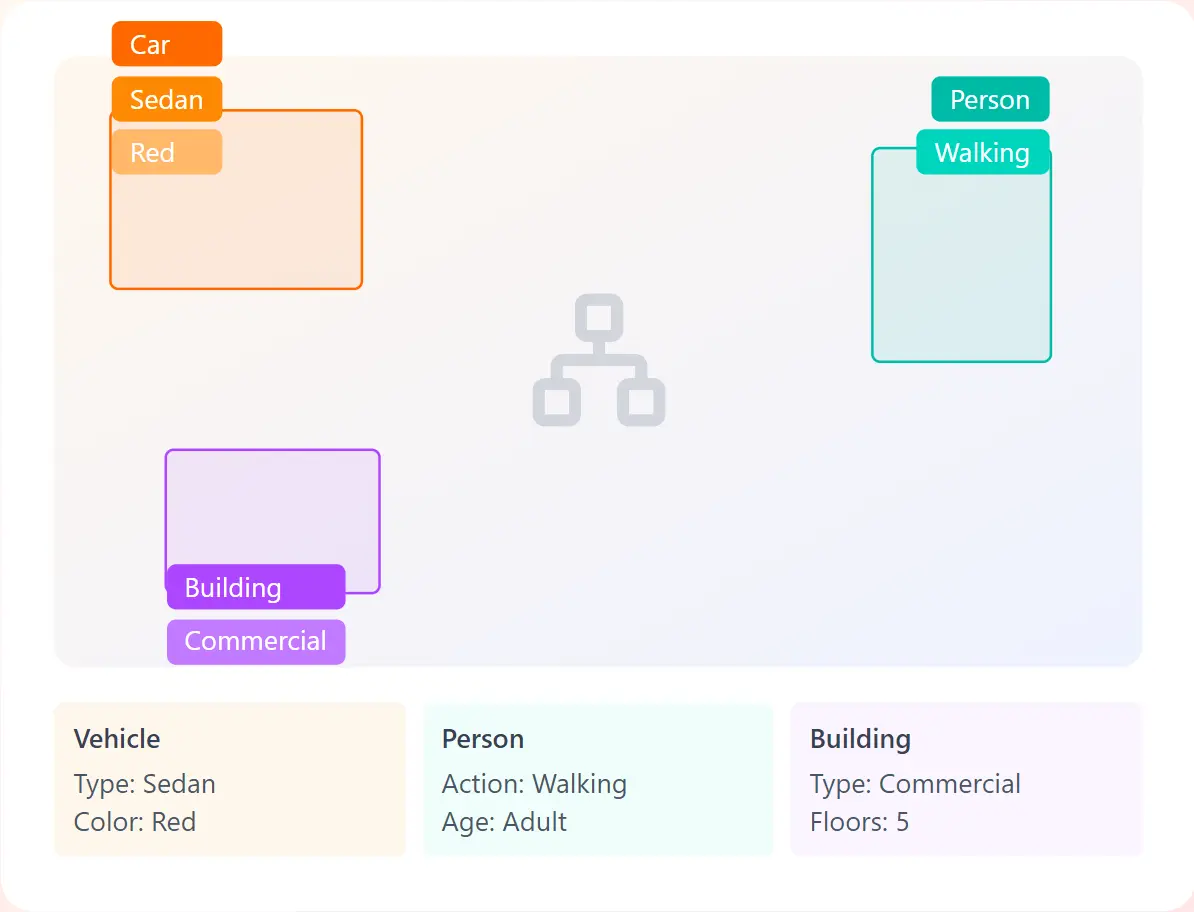
Multiple labels per object for complex classification

Professional multi-class annotation supporting hundreds of categories with hierarchical taxonomies. Perfect for complex scene understanding, fine-grained classification, and multi-attribute labeling.
TRUSTED BY
Amazon
Google
Microsoft
Tesla
Uber
Meta

Multi-Class Capabilities

Advanced classification solutions

Comprehensive multi-class annotation supporting complex taxonomies and multiple attributes per object

Hierarchical Classification

Organize labels in multi-level hierarchies with parent-child relationships for structured taxonomies and ontologies.

Multi-Attribute Tagging

Assign multiple attributes per object including appearance, state, behavior, and contextual properties.

Fine-Grained Classification

Distinguish between hundreds of similar categories with subtle differences for detailed object recognition.

Multi-Label Per Object

Apply multiple non-hierarchical labels to single objects for comprehensive attribute coverage.

Relationship Annotation

Define relationships between objects including spatial, temporal, and semantic connections.

Custom Taxonomy Development

Work with our team to design domain-specific classification schemes tailored to your unique requirements.

Our Process

How multi-class annotation works

A systematic approach to complex classification with hundreds of categories and attributes

STEP 1

Taxonomy Design

Define hierarchical class structure and attribute relationships

STEP 2

Multi-Label Assignment

Apply all relevant classes and attributes to each detected object

STEP 3

Consistency Validation

Verify label coherence and attribute combinations across dataset

STEP 4

Taxonomy Export

Deliver structured labels with full taxonomy and relationship data

Complex classification at scale

Supporting sophisticated multi-class annotation for advanced computer vision

300+

Max classes supported

10M+

Multi-class objects labeled

98%

Label consistency rate

50+

Taxonomies deployed

Use Cases

Multi-class annotation applications

Powering complex classification across industries requiring detailed object understanding

Autonomous Vehicles

Complex road scene analysis

E-commerce

Product categorization

Medical Diagnosis

Multi-condition classification

Content Moderation

Multi-attribute tagging

Agriculture

Crop and pest classification

Manufacturing

Defect type classification

Real Estate

Property feature tagging

Security

Threat classification

Ready for complex multi-class annotation?

Get started with professional multi-class labeling. Support for hundreds of categories, hierarchical taxonomies, and custom attributes.

Multi-Class Annotation FAQs

Common questions about our multi-class annotation services

We support up to 300+ distinct classes per project. Common datasets range from 20-100 classes, while specialized projects like fine-grained product classification may use 200+ categories. We can organize classes in hierarchical taxonomies with multiple levels and support both mutually exclusive and multi-label classification.

Hierarchical classification organizes labels in parent-child relationships (e.g., Vehicle > Car > Sedan > Toyota Camry). Use it when your domain has natural categorical hierarchies, you need different granularity levels, or want to enable both coarse and fine-grained predictions. It improves model performance and enables flexible inference.

Yes, we support multi-label annotation where objects can have multiple non-exclusive labels. For example, an image could be tagged as both “outdoor” and “daytime” and “people”, or a product could be “red” + “sale” + “electronics”. This is different from hierarchical labels and useful for attribute-based classification.

We use detailed annotation guidelines, category examples, decision trees for edge cases, regular annotator calibration sessions, automated consistency checks, and consensus review for ambiguous cases. Our QA process includes inter-annotator agreement measurement and identifies systematic labeling errors across the class distribution.

We deliver multi-class labels in COCO JSON (with category hierarchies), CSV with class IDs and attributes, custom JSON schemas, and can include confidence scores, class probabilities, and relationship graphs. We also provide taxonomy files defining the class structure and attribute mappings for easy integration.

Absolutely. Our team works collaboratively to design optimal taxonomies based on your data, use case, and model architecture. We analyze sample data, recommend class granularity, define hierarchies, identify edge cases, and iterate based on pilot annotation results to ensure the taxonomy meets your needs.